BBC News reports that 3200 US prisoners were released early over a 13 year period due to a software bug. It’s hard to fathom how this could have been released in the first place, how it remained undetected for so long, and finally why it’s taken so long to fix.
The bug miscalculated the sentence reductions prisoners in Washington state had received for good behaviour. It was introduced in 2002 as part of an update that followed a court ruling about applying good behaviour credits.
Ok, we know that there’s always room for mis-interpretation of requirements when developing software, and every program needs some period of user acceptance testing.
The Washington Department of Corrections (DoC) added that it was made aware of the problem in 2012 when the family of one victim found out that the offender was getting out too early.
Huh? It took ten years for someone to notice? The average mis-calculation was 49 days and a maximum of 600 days – and it wasn’t noticed? What sort of testing did they do – surely some worked examples were provided?
Despite this, the faulty software was not corrected until a new IT boss for the DoC was appointed, who realised how serious the problem had become.
This is the crux of the matter – if you’re writing mission-critical software, you have to test accordingly. Here, prisoners released early may have committed further crimes – that’s a hefty penalty that could have been avoided by professional software practices: code reviews, test coverage analysis, user acceptance testing. Surely some regression data tests existed when they were releasing the upgrade – someone must have signed off that all these differences were fine “because the rules have changed”. Yes, but not by that much!
Mr Inslee said he had ordered the DoC to fix the software as quickly as possible. An update that applies the correct formula for calculating sentence cuts is due to be in place by 7 January.
Let’s hope they’ve thoroughly reviewed their test coverage now and that the release goes smoothly. Also, they should review any other software developed by the same team in that 2002 period, it’s unlikely to be an isolated mistake.
Filed under Musing, Programming
Tagged as Testing

 Randall Munroe’s excellent Thing Explainer is on the shelves at Foyles. I bought this for some fun holiday reading and it’s very good value (£5 in the UK for the hardback edition).
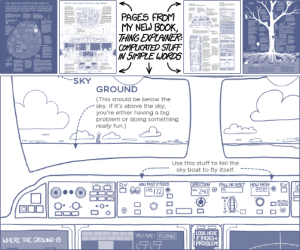 The author is probably more widely read as the illustrator of xkcd.
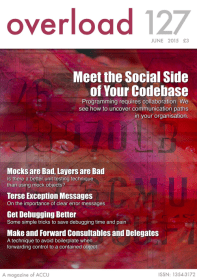 Catching up on back issues of ACCU’s
  This book is part of the SciFi MasterWorks series, so I had high expectations, especially as it was written by the lauded Philip K Dick. However, this book is different to others that I’ve read by him – it starts very slowly, seemingly in a normal family in a sleepy American town. Only much later does the plot encompass a more science fiction element, and a more sinister reason behind the daily puzzle that Ragle Gumm must complete is revealed.
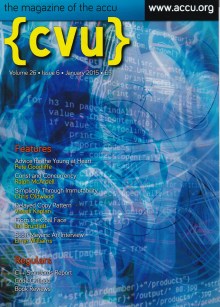
 Christopher’s is billed on OpenTable as an American restaurant. Whatever image that conjures up for you (American Diner/MacDonalds?!), it’s unlikely to be the grandeur that meets you when you dine at 18 Wellington Street, Covent Garden. We had the scallops/tuna tartare for starters, both of which were excellent. We chose steaks for the main course, both were beautiful, with the Scottish fillet having the meatier taste than the New York Strip. However, it was the sweet and sour carrots that stole the show!
 This book is part of the Science Fiction MasterWorks series, which hints at its pedigree, although the series covers a broad range of SciFi styles. This one tells of adventures in space, where we follow the trail of John Truck and his ship the My Ella Speed.
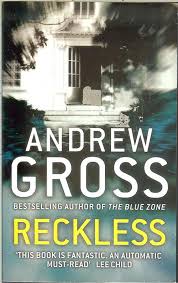 This is the second book I’ve read by Andrew Gross, the first being Judge and Jury. That book started off with children being blown up on a school bus and I found it so tasteless that I didn’t finish the book.
 musingstudio